

Natural Materials in Architecture: A Guide for Developers and Owners
Written by the Pablo Luna Studio Research Team
October 2026
- ARCHITECTURE
- DESIGN WITH NATURE
- SUSTAINABILITY
Natural materials such as bamboo, timber, earth, stone and lime are not a style. They are a way of building that belongs to its place. When they are chosen with care and detailed with honesty, they lower a project’s carbon, create healthier and calmer spaces, and age with dignity instead of decaying. They also ask for knowledge, craft and maintenance. A good architect explains both sides.
There is a belief we hold close in our studio: attention is the beginning of devotion. Before we choose a single material, we try to understand what the land already offers. The soil, the stone in the riverbed, the bamboo growing on the slope, the hands of the craftspeople who live nearby. Very often, the most meaningful material for a project is the one the place has been offering all along.
When an owner trusts us with their land, their capital and their vision, the material palette is one of the first places where that trust is honored or lost. This guide shares how we think about it.
Why materials matter more than ever
The numbers are clear. According to the most recent Global Status Report for Buildings and Construction from UNEP and the Global Alliance for Buildings and Construction, the sector now accounts for nearly half of global material extraction, 37% of global emissions and 28% of global energy consumption. Cement, steel and aluminum used in buildings alone were responsible for about 9% of global emissions in 2024, and the report warns that shifting to low carbon materials early is critical to avoid locking in high emissions for decades.
That last point matters for every developer. Embodied carbon is spent before a building ever opens its doors. No efficient air conditioner can recover it later. The decision is made on the drawing table, in the first months of design. UNEP itself points in the direction we have followed for years: shifting wherever possible to low carbon materials such as sustainably sourced bricks, bamboo and agricultural waste like straw.
Nature does not understand sustainability
This is something I often say to our team. Nature is not gentle with buildings. Sun, rain, humidity and wind are indifferent to our intentions. A natural material placed carelessly will fail, and it will fail faster than a synthetic one.
So for us, building with natural materials begins with protecting them. We measure sun in hours, not only in angles, because one hour of afternoon sun on a wall is manageable and six hours turns a room into an oven. We design deep roofs and generous eaves that act as permanent parasols, keeping bamboo and timber dry and shaded. We lift structures away from ground moisture. The architecture itself becomes the first layer of maintenance.
What natural materials give a project
A sense of belonging. The grain of timber, the strata of stone, the soft surface of lime plaster carry the story of where they come from. Guests and residents feel this, even when they cannot name it. A building made from its own landscape cannot be copied and placed anywhere else, and that is precisely its value.
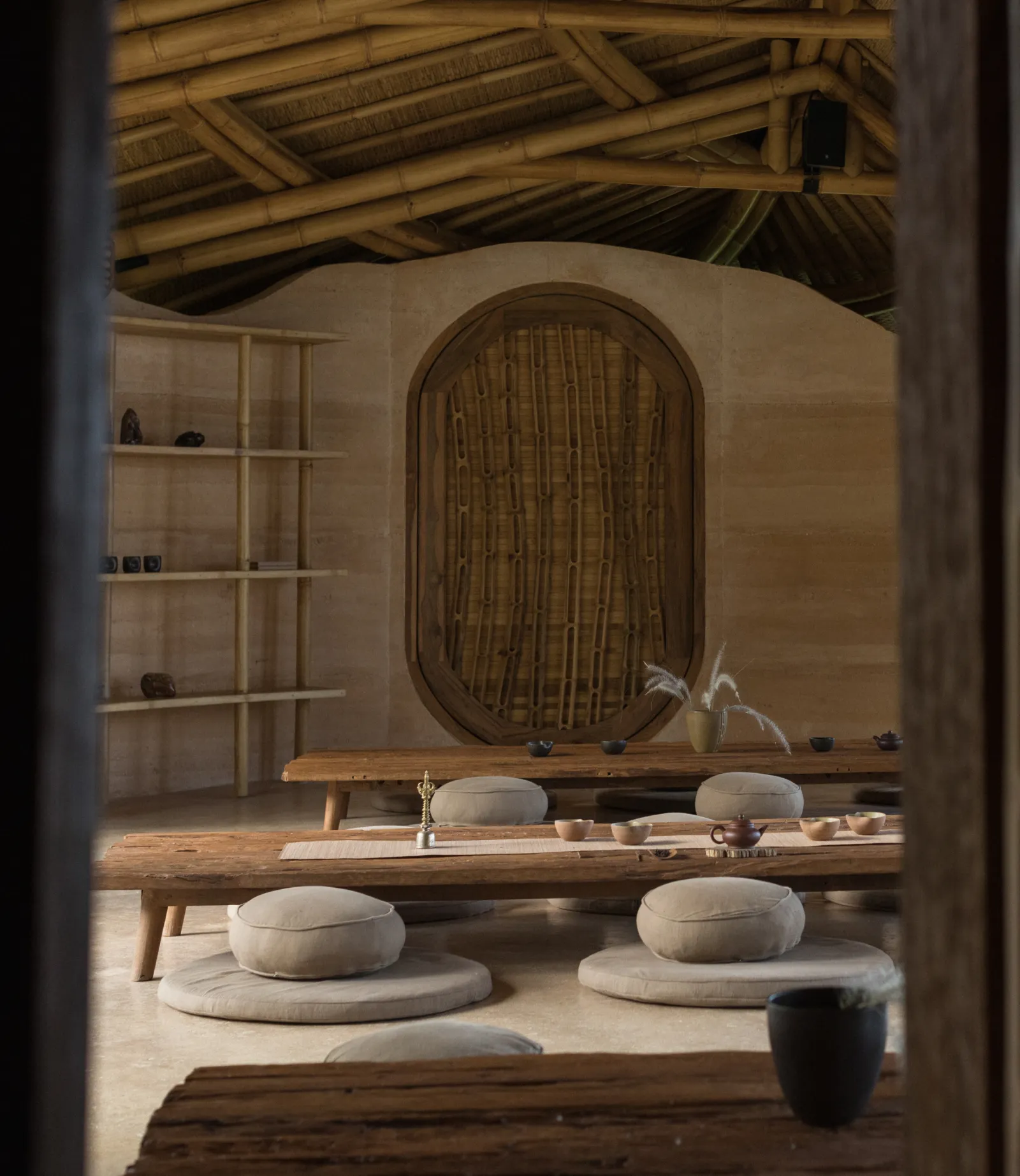
Spaces that care for the body. Clay and lime finishes breathe. They help regulate indoor humidity and avoid the chemical off gassing common in many synthetic paints and sealants. Earth and stone hold coolness through the day. Bamboo and timber soften sound. These qualities are not decoration; they are how a space helps the nervous system slow down.
Performance across decades. Thermal mass in rammed earth and stone absorbs heat by day and releases it slowly at night, reducing the work mechanical systems must do. Well protected timber and bamboo structures last for generations. Natural materials develop patina rather than wear, so the building grows more beautiful with time instead of looking tired.
Lower carbon and a circular life. Bamboo and sustainably harvested timber store carbon as they grow. Earth needs very little energy to prepare. Most natural materials can return to the soil or be reused at the end of their life. Sourcing them regionally also shortens transport and keeps value within the local community and its craft traditions.
Honesty about cost, craft and care
Integrity means telling the whole story, so here it is. Some natural materials cost less than conventional options, especially when they come from nearby. Others, like carefully selected stone or specialist joinery, cost more at the start. The fair way to judge them is across the life of the building: energy saved, repairs avoided, years of use gained, and the value of a place that people remember.
Natural materials also ask for knowledge. Bamboo must be harvested at maturity, treated properly and detailed to stay dry. Lime and earth finishes need skilled hands. Timber needs periodic oiling. These are not reasons to avoid them. They are reasons to plan for them from the beginning, with a clear maintenance guide handed to the owner and the operations team.
How we choose materials at Pablo Luna Studio
We never start with a material, just as we never start with a render. We start with the concept, the one clear idea a project is built around. The material palette grows from that idea and from the site.
During our Feasibility phase, we visit the land, study its climate and resources, and define the first design guidelines and material direction together with the client. In Design Development, materials are specified in detail and tested. We build physical bamboo models by hand to understand structure, joinery and proportion, and we review the digital models alongside them. Throughout, we work with structural engineers, bamboo master builders and local artisans whose knowledge is older and deeper than ours.
Every building we have made carries the fingerprints of these people. We are deeply grateful to them, because natural architecture is never the work of one person. It is a conversation between the land, the craft and everyone who listens carefully.

FAQ
Are natural materials always more expensive? No. Many are competitive, especially when sourced locally. Where the initial cost is higher, the difference is often recovered through lower energy use, fewer replacements and longer service life. We help clients see these figures early, so decisions are made with clarity.
Do natural materials work in tropical climates? Yes, when they are designed for them. Deep overhangs, raised foundations, cross ventilation and proper treatment allow bamboo, timber and earth to perform for decades in humid conditions. In tropical regions, these materials have been used successfully for centuries.
Can natural materials feel contemporary? Absolutely. Large bamboo spans, refined stone, rammed earth walls and polished lime surfaces can create architecture that is bold, sculptural and calm at the same time. Natural does not mean rustic.
How does your studio guide material selection? We begin with the site, the climate and the client’s vision. We present a considered palette with samples and models, and we explain honestly how each material performs, what it costs across its life, and how it should be cared for.
share this blog
want to learn more?
Join our community of natural builders and learn from our blogs, natural material library, and online course.
comparte este blog
¿Quieres aprender más?
Únete a nuestra comunidad de constructores naturales y aprende a través de nuestros blogs, biblioteca de materiales naturales y curso en línea.

